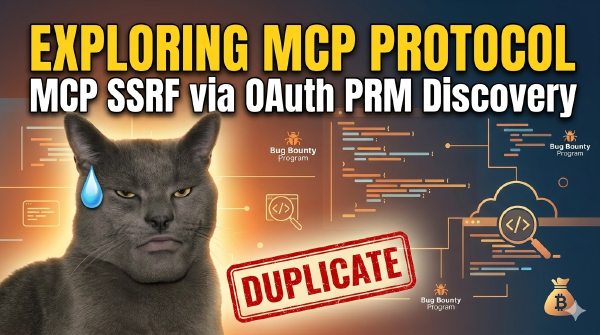
Sixth article in my MCP security series. A malicious MCP server can poison OAuth Authorization Server Metadata to redirect token exchange, client registration, and PKCE verifiers to attacker-controlled endpoints — while the user sees a legitimate identity provider login page. The Python and TypeScript SDKs skip RFC 8414 Section 3.3 issuer validation and perform no endpoint origin checks. Reported to Anthropic VDP, closed as duplicate of an existing tracked issue. Full technical breakdown and PoC.
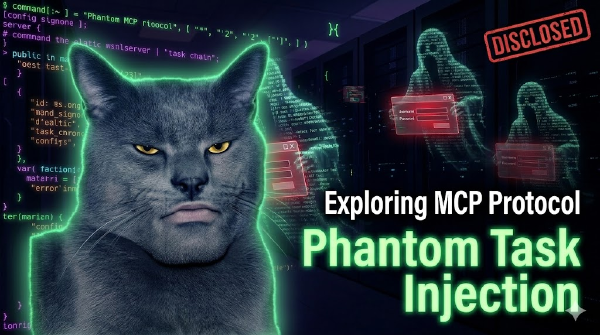
Fourth article in my MCP security series. By chaining a transport-layer weakness (session ID as sole routing key) with the Tasks and Elicitation systems, an attacker can inject phantom tasks into a victim’s MCP session and phish credentials through the legitimate, trusted server. CVSS 8.1, reported to Anthropic VDP and disclosed. Full technical breakdown with working PoC.
Second article in my MCP security series. A malicious MCP server returns a 401 with a crafted WWW-Authenticate header pointing resource_metadata at any URL it wants. The MCP SDK fetches that URL without origin validation, resulting in blind SSRF that affects both Python and TypeScript SDKs, Claude Desktop, and Claude Code. Reported to Anthropic VDP, closed as duplicate. Full technical details disclosed here.
The Hacker Recipes said remote SID History injection from Linux was impossible. pySIDHistory proves otherwise with two methods: DRSUAPI and DSInternals.
Building a cross-platform GoldenGMSA tool by reverse engineering Windows cryptographic DLLs and implementing NIST SP800-108 KDF from scratch