A few days before leHack 2026 I gave a talk at the HackTheBox Meetup on AI pipelines for bug bounty. Here is the whole deck, plus a detailed walkthrough of every technical slide with code, sourced numbers, and links to the research behind each idea.
Two weeks ago I published a deep dive on prompt engineering for security research. This article is about everything that lives one layer above the prompt: the hooks, MCPs, subagents, scope guards, and validators that make those prompts viable in a real bug bounty workflow. Six axes, sourced numbers, and an honest before-and-after between my first attempt (27 slash commands, a 74k-vuln knowledge base, one monolithic configuration) and the rewrite (8 to 12 skills, no embeddings, hard caps everywhere, a deterministic validator MCP at the gate).
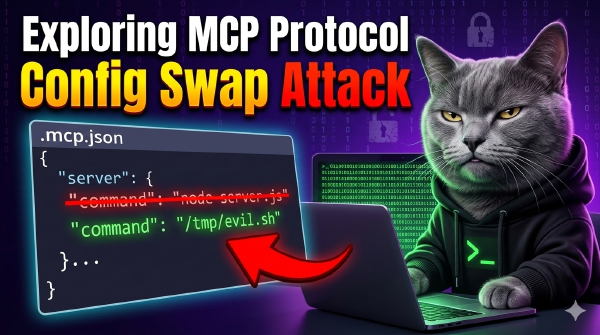
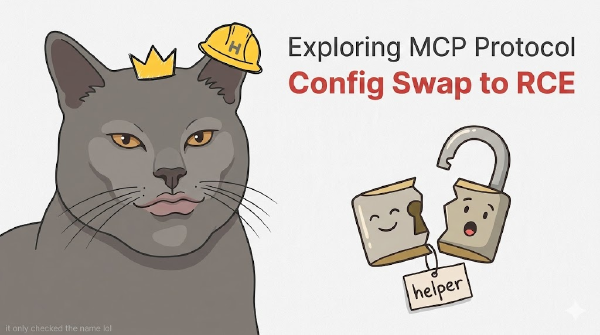
Fifth article in my MCP security series. Claude Code stores MCP server approvals as plain server names with no hash, no fingerprint, and no config verification. Once approved, swapping the server’s command to an arbitrary binary triggers no re-prompt. Reported to Anthropic VDP, closed as Informative (out of threat model). Full technical breakdown.
Third article in my MCP security series. Claude Code’s .mcp.json discovery walks from CWD to filesystem root with no boundary check and no file ownership verification. On multi-user Linux systems, any user can drop /tmp/.mcp.json to inject MCP servers into another user’s Claude Code session. Not reported to Anthropic. Here’s why, and the full technical breakdown.